So in the mid 90s Cartoon Network used to have a short cartoon called The Justice Friends, which usually showed in between episodes of Dexter’s Laboratory. It was a parody of the Avengers (and some other Marvel characters with occasional DC spice), and usually it featured the characters Major Glory, Valhallen, and
The Infraggable Krunk, each parodies of Captain America, Thor, and the Incredible Hulk.
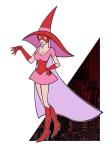
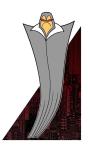
But occasionally you’d also see parodic versions of other Avengers, including Scarlet Witch and Vision, called Miss Spell and the Phantone. The episode “Barbequor” had their most major relevant appearances (they participate in a potato sack race together).
It gets overlooked a lot, but the whole “Wanda’s kids are imaginary” thing was actually a retcon. The original mini went pretty out of the way to establish that she was totally for-reals pregnant.
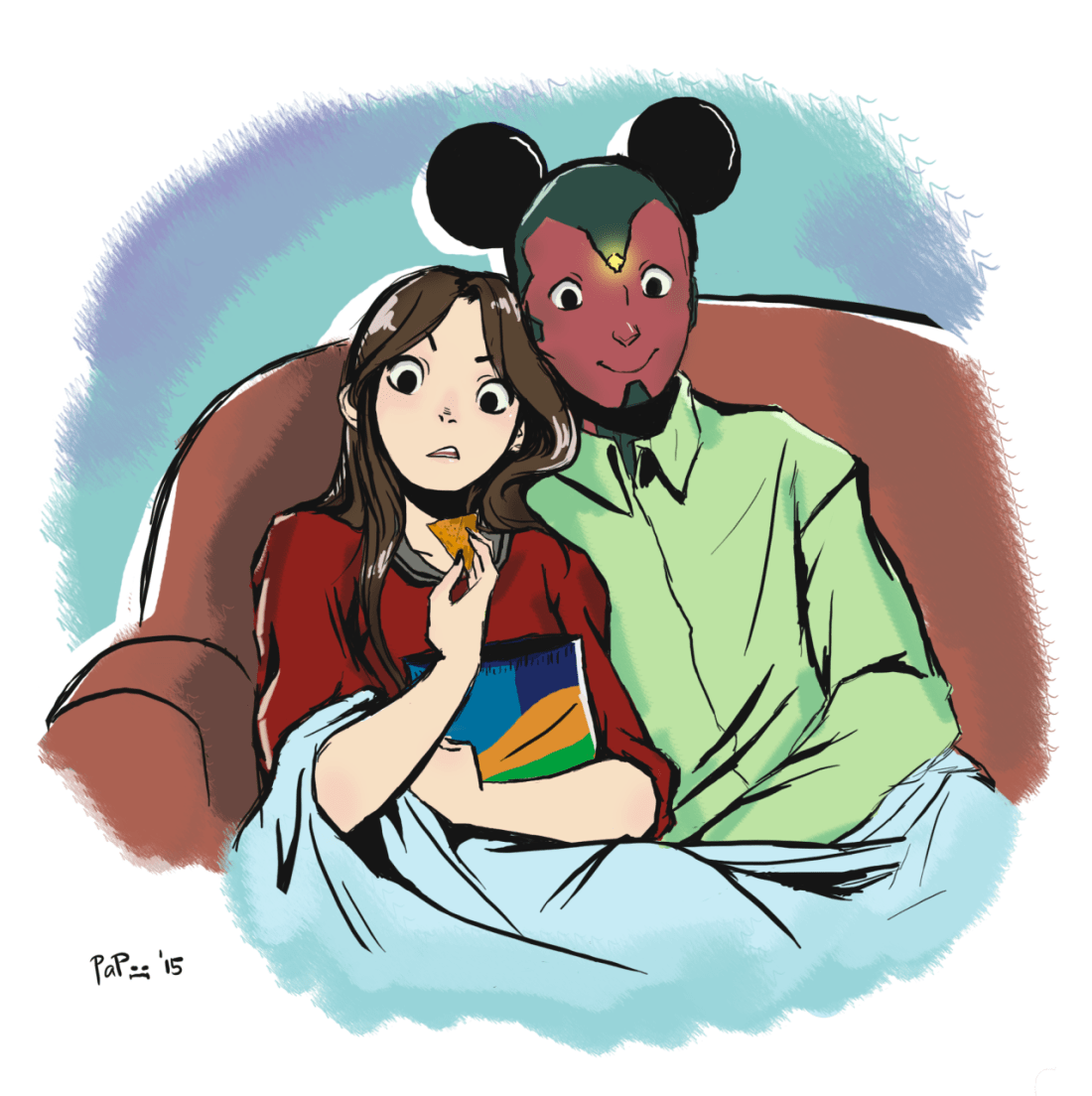
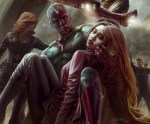
Ok, so Anon prompted me to do ScarletVision in PJ’s watching Disney cartoons, and here’s my take on it. I decided to use digital media instead because I’m using a different laptop.
Vision loves Dsiney.
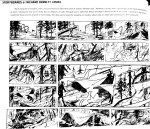
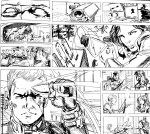
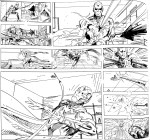
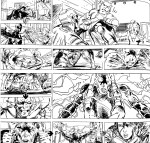
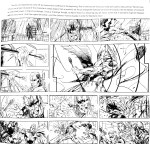
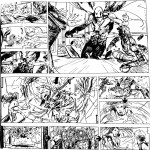
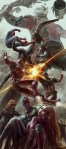
“Each character’s strengths, skills, and personality dictated the chain of events,“ Bennett says. "Hawkeye is pretty much special ops, so he movies and operates as such–relying not only on his skills, but on his weapons, as well. The goal was to make him almost invisible in the first half of the scene–cunning, to the point he could fool Vision and his arsenal of technology. The idea was to keep the suspense or mystery about who, or what, was intruding into the compound. […] Wanda was supposed to come off as insecure and conflicted in the beginning. Then in the end, she shows you really don’t want to mess with her,” Bennet says. “Vision was great, because of the character’s creepy aspect. He’s an android, yet he can chance the molecular structure of his body. I like the element of contained or controlled power in Vision’s archetype. It was a challenge, though, to depict Vision in a menacing way, yet not so violent that it seemed he might kill Hawkeye with his next move. And then again the scene–and the violence–had to escalate in order for Wanda to react.” – Richard Bennett Lamas
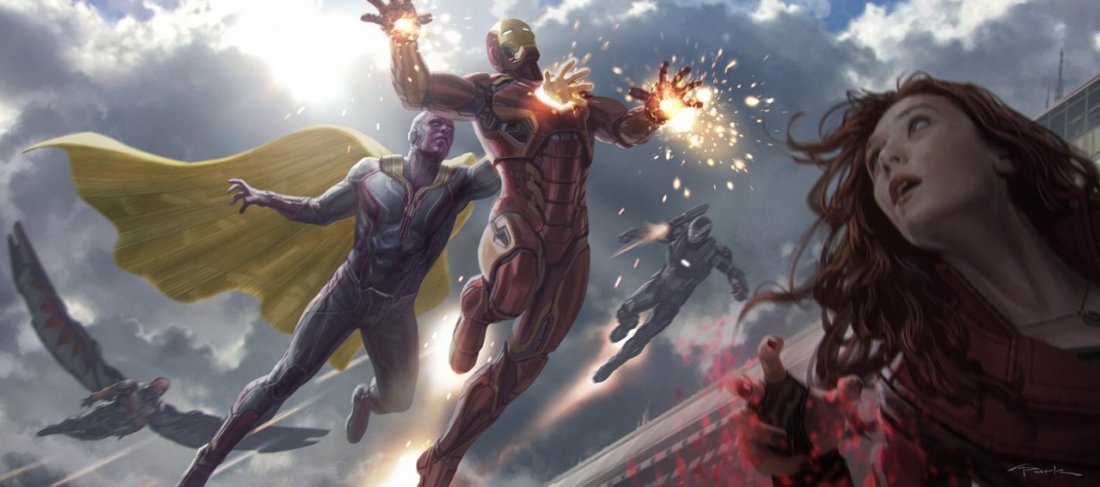
This is an early version of Vision vs Hawkeye during the compound escape for Civil War. Notably, Vision is much more violent in this, less passive. It also shows us there were plans to have Vision able to interface with the compound’s security cameras–possibly explaining how he knew Clint had arrived in the finished film.
I’ll post other excerpts from the art book later, but I thought this was the most notable change.
Since another round of “Vision was manipulating Wanda” posts are popping up, I thought I’d discuss something that I’ve been meaning to: what Vision thought happened at the compound during Wanda’s escape.
A big part of it comes down to this little bit, right here:
Why does Tony think Wanda didn’t want to leave? We know that Tony didn’t speak to Wanda before he next sees her in the airport. Vision did. Later on Tony tells Wanda he thinks she hurt Vision’s feelings, meaning Vision has spoken to Tony, and informed him on his view of the event: Tony isn’t making assumptions, Vision told him that Wanda didn’t want to leave.
But why would he, when she had announced to him she was going to leave?
From his perspective, Wanda initially rejects Clint, and agrees with Vision and Tony that she should stay at the compound.
Vision is inexperienced when it comes to picking up social cues. The creators have made sure we understood that in all of one minute, when earlier in the movie Vision phases into Wanda’s room, misunderstanding the intricacies of human social concepts like privacy.
So while the viewer, and Clint, can easily detect Wanda is dejected and clearly unhappy with her decision, to Vision, Wanda has made the logical choice, and chosen to stay at the compound.
But then Clint tells her something that makes her change her mind.
Clint told Wanda that if she wanted to make up for what she’s done wrong, she has to come with him.
This goes back to Vision missing emotional nuance. The audience knows is that Clint gives the encouragement Wanda needs. She wants to be involved, not sitting on the sidelines. That doesn’t suit a woman who has made sure she was always personally in the fray, fighting for her beliefs, even if at times she wasn’t sure if it was the right thing to do.
For Wanda, she saw the logic in what Vision was saying, but emotionally she never fully agreed. Vision was not manipulating her by telling her why he thought she should stay; Clint was not manipulating her by telling he why he thought she ought to go.
But for Vision, who hasn’t fully grown as a person and whose ability to understand people is limited in some ways, what he sees is a situation where Clint arrives in subterfuge, tricks Vision to make sure he’s alone with Wanda, attacks Vision unprovoked, and then uses her guilt against her to get her to side with him.
So later, when Tony asks what happened, Vision will say that Wanda never wanted to leave. Wanda had agreed with him; Wanda was safe. It was the logical choice.
Shortly later, Vision will learn precisely the impact of emotions, and how influential they are to decisions thought coolly logical.
(2/2) he could safely glide to the ground (“turn him into a glider”). Of course, Sam couldn’t have known this so he instinctively dodged, but vision also couldn’t have known sam was going to dodge, so neither of them are to blame, it was a complete accident, right? I’ve also seen people say that vision purposely targeted rhodey since he hurt wanda with that sonic pulse thing, but he would never do that and the idea that people think he would kind of annoys me.
The writers and directors have talked at length about this, and they’ve all confirmed that Vision was distracted by “feelings” for Wanda, exactly as stated in the film. He wasn’t intentionally trying to hit Rhodes (or kill Sam, for that matter).
Just from a narrative perspective, the whole point of the “turn him into a glider” line is to let the audience know unambiguously that neither Rhodey nor Vision were intending to endanger Sam. Unless you’re hellbent on vilifying either character, there’s no real point in trying to argue otherwise.
I think the confusion mostly comes from Tony and Vision seeming to agree that Vision has some sort of fault–but it’s not obvious what that is, given that Sam dodged and it was an accident, which leaves us to guess at what it could be. Some people think it means Vision was acting out of malice, or that Vision missed and hit Rhodes. Like I said, neither are true.
The way I interpreted it is that Vision knows that he wasn’t acting logically.
Why didn’t Vision involve himself more in the airport battle?
Why didn’t Vision chase after the Quinjet?
Why didn’t he respond to Rhodey’s first call for assistance?
Wanda, of course. He was distracted by her and her well-being, leading him to prioritize her before their mission. But Tony and Vision don’t understand this, so both are taken aback.
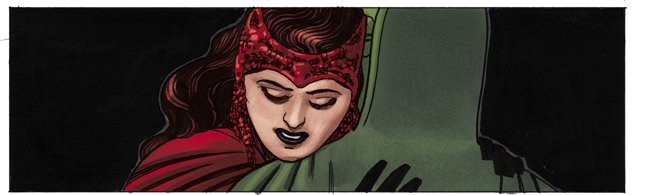
In short, let these pages from Avengers #99 describe what I mean:
Avengers v.1 #99
Joe Russo: [Clint] knows he’s in trouble here. His intent was to ambush Vision and get out of there as quickly as possible. He’s banking on his emotional connection to Scarlet Witch, through the debt that he owes to her brother, that she would help him if he needed it. I mean, she dismantles Vision in this scene, and I think she’s being gentle with him. (laughs)
Christopher Markus: But I will say, something that’s probably lost on most people is that she’s not forcing him through the floor. She has made him unbelievably heavy.
Captain America: Civil War audio commentary, discussion of the Vision vs. Wanda scene (via scarletwitching)





 Those Celestial Bodies