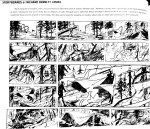
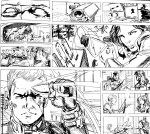
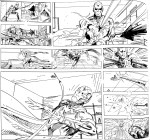
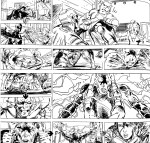
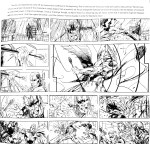
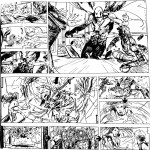
“Each character’s strengths, skills, and personality dictated the chain of events,“ Bennett says. "Hawkeye is pretty much special ops, so he movies and operates as such–relying not only on his skills, but on his weapons, as well. The goal was to make him almost invisible in the first half of the scene–cunning, to the point he could fool Vision and his arsenal of technology. The idea was to keep the suspense or mystery about who, or what, was intruding into the compound. […] Wanda was supposed to come off as insecure and conflicted in the beginning. Then in the end, she shows you really don’t want to mess with her,” Bennet says. “Vision was great, because of the character’s creepy aspect. He’s an android, yet he can chance the molecular structure of his body. I like the element of contained or controlled power in Vision’s archetype. It was a challenge, though, to depict Vision in a menacing way, yet not so violent that it seemed he might kill Hawkeye with his next move. And then again the scene–and the violence–had to escalate in order for Wanda to react.” – Richard Bennett Lamas
This is an early version of Vision vs Hawkeye during the compound escape for Civil War. Notably, Vision is much more violent in this, less passive. It also shows us there were plans to have Vision able to interface with the compound’s security cameras–possibly explaining how he knew Clint had arrived in the finished film.
I’ll post other excerpts from the art book later, but I thought this was the most notable change.

 Those Celestial Bodies